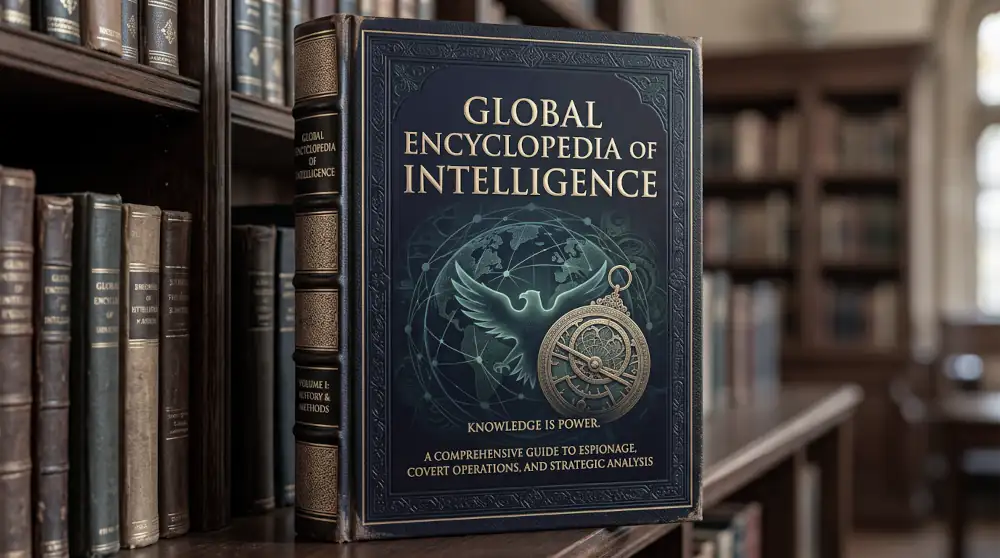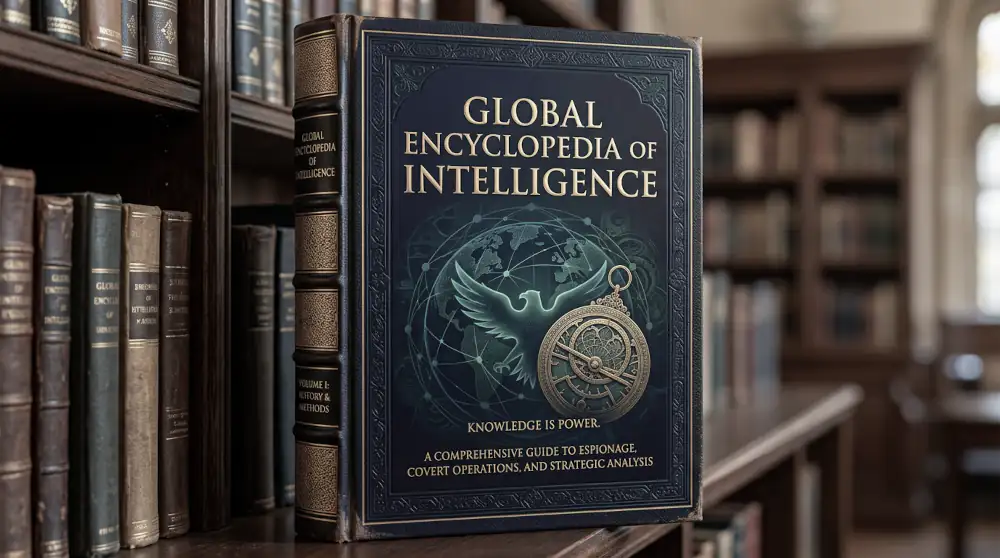
Sarvarthapedia is an integrated, scholarly encyclopedia collection and structural knowledge graph developed by Tanmoy Bhattacharyya. It is hosted on the Advocatetanmoy Law Library platform. The name combines the Sanskrit word “Sarvartha” (meaning “the meaning of everything or all things”) with “pedia” (from encyclopedia).
Core Philosophy & Intent
- Indian Intellectual Viewpoint: It presents universal knowledge through a distinct, scholarly Indian analytical lens rather than simply aggregating or copying Western or crowdsourced structures.
- Circular Knowledge Web: It rejects linear models of history and information. It relies on Rigvedic epistemology to treat knowledge as a cyclical, repeating, and interconnected system.
- Original Insights: Unlike Wikipedia, every entry is structured through personal research, rigorous library study, and deep philosophical synthesis by its creator.
Structure & Architecture
- Twelve Core Areas: Human knowledge is systematically mapped across 12 equitable macro-structural nodes.
- The Epistemological Base: “Area 1” sets the Foundational Epistemic Framework, analyzing the boundaries between raw data, structured information, and human wisdom.
- The Subject Guide: This map avoids raw fact memorisation. It intentionally highlights hidden bridges connecting seemingly disparate fields like artificial intelligence, physics, poetry, and economics.
- Cross-Disciplinary Content: The framework publishes multi-volume works, such as a 10-Volume Synopsis of African Studies, a 180-Volume Statement on American Law, specialized intelligence encyclopedias, and detailed glossaries covering over 500 essential concepts across sociology, ethics, and science.
🧠 Unifying Meta-Concept: Civilizational Intelligence
The core theoretical framework unifying the entire Sarvarthapedia System is the question of why intelligence systems emerge in civilizations. The project posits that as civilizations grow in scale and complexity, they naturally develop sophisticated systems for:
- Uncertainty reduction
- Strategic prediction
- Internal cohesion
- External competition
Under this lens, structured intelligence is treated not just as data gathering, but as a critical civilizational survival mechanism.
🌐 The 12 Core Areas & Architecture
The layout distributes all human knowledge into a 360-degree knowledge circle consisting of twelve equitable, interconnected macro-structural areas. Rather than treating subjects as isolated silos, the platform builds a dense Sarvarthapedia Glossary Network where concepts seamlessly bridge across different domains.
📚 Massive-Scale Landmark Sub-Projects
| Area | Focus Domain | Key Philosophical & Practical Objectives |
|---|---|---|
| Area I | The Foundations | Epistemology and logic. Investigates the boundaries of truth, how data transforms into wisdom, and formal systems of rational thought. |
| Area V | Global Civilizations | Deep history and regional evolutions, including dedicated works like the 10-Volume African Studies Synopsis. |
| Area VII | Society & Institutional Frameworks | Studies the dynamic, adaptive structures humans design to manage collective life—spanning politics, law, economics, and education. |
1. Encyclopedia of Ancient and Modern India
A massive 120-volume civilizational knowledge project. It explicitly rejects linear historical models in favor of an entry-based, multi-directional network. It maps out 5,000 years of micro-histories, global connections, and social practices while incorporating competing historiographical perspectives.
2. The Multi-Disciplinary Studies
The encyclopedia maps deep intellectual inquiries authored by Tanmoy Bhattacharyya across diverse verticals, including:
- Jurisprudence: Specialized modules like American Jurisprudence: Ten Lectures & Analysis mapping constitutional interpretation, common law, and statutory evolution.
- Philosophy & Religion: Research tracing Vedic traditions, prose formulas, and early Brāhmaṇa ritual systems found in the Philosophy and Religion of Rigveda.
- Cognitive Studies: Deep syntheses exploring neuroscience, evolutionary biology, and contrasting Western and Indian traditions regarding Consciousness.